Pompeii of the East and my Big Mistake at an Ancient Wonder
Part IV – Dangers of Travelling in the Middle East
Pompeii of the East, and my Big Mistake at an Ancient Wonder
I shook my head, but the black spots kept swirling in front of my eyes. I struggled to see the details as I stood looking over the hillside. My head started to spin and the everything started to tilt.
I quickly sat down on a big stone that had been placed there nearly 2,000 years ago, and leaned back into the shade of an ornate Corinthian column towering some 15 metres above my head – about the height of a 5-storey building.
This was the front of the Temple of Zeus in what was sometimes called “Pompeii of the East” – one of the best-preserved Graeco-Roman provincial towns in the world but little known. Like Pompeii, it is a well preserved ancient Roman city in ruins. But Pompeii was buried in AD79 by the eruption of Mt Vesuvius near Naples, and forgotten for 1,500 years. This one, Jerash, was only forgotten by the Western world.
The black spots started floating across my vision at the last-but-one of my stops after spending an amazing afternoon roaming through the ancient second century streets.
Someone leaned over me.
“Are you ok?”
I shook my head. I was feeling nauseous and wondering whether I was going to throw up or pass out. He passed me a bottle of water.
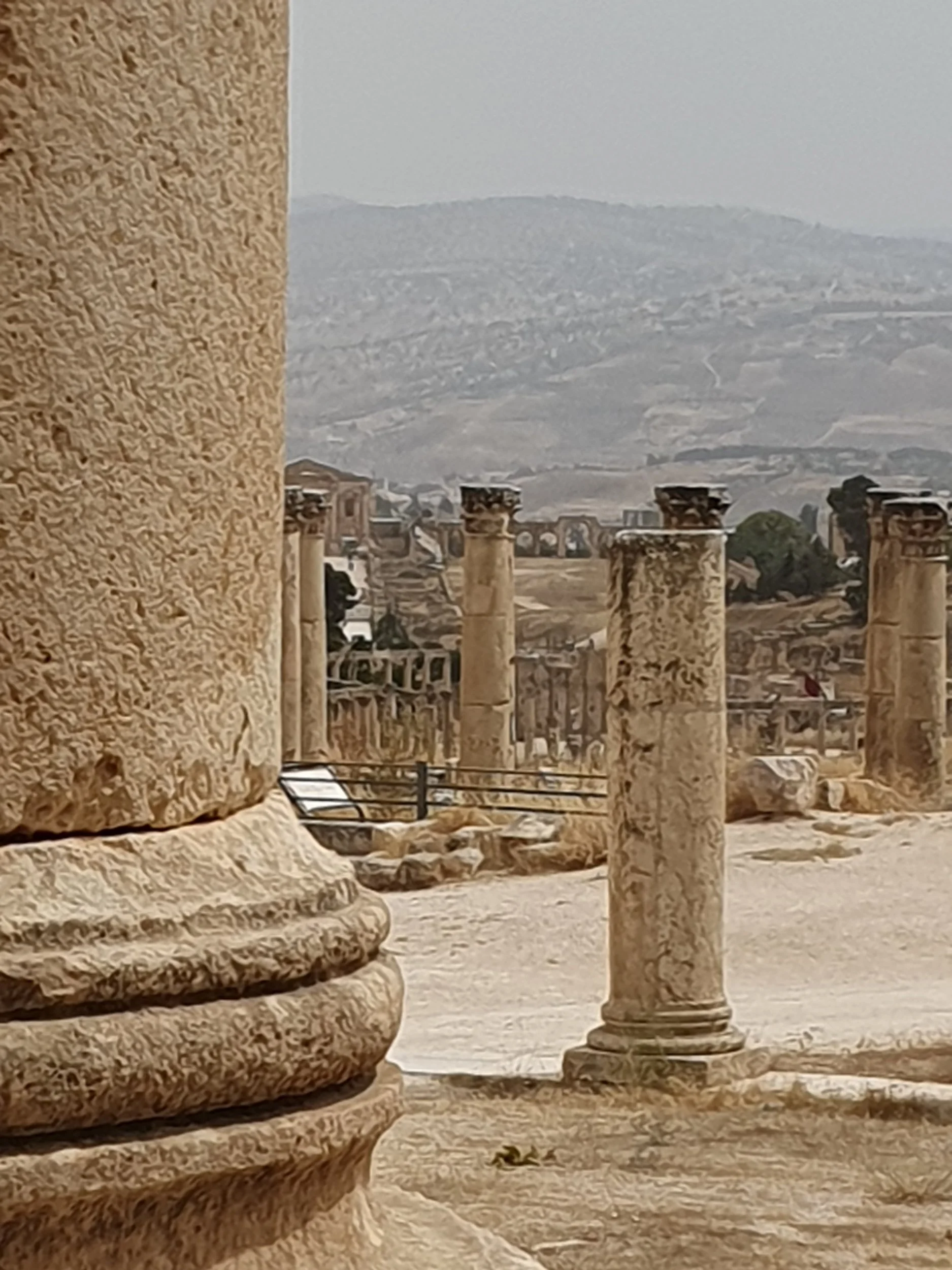
The view that was hard to see for the black blobs swirling across my vision.
This had all started with an ancient Roman gate – a huge arched gateway with two side arches – that made a grand entrance to the city that was for a while called Antioch. As always, I stared in awe, trying to imagine toga-wrapped Romans, coming and going about their business. At school I’d studied Latin (I proudly came top of my class… of one!) and history, so ancient Roman ruins always excite me.
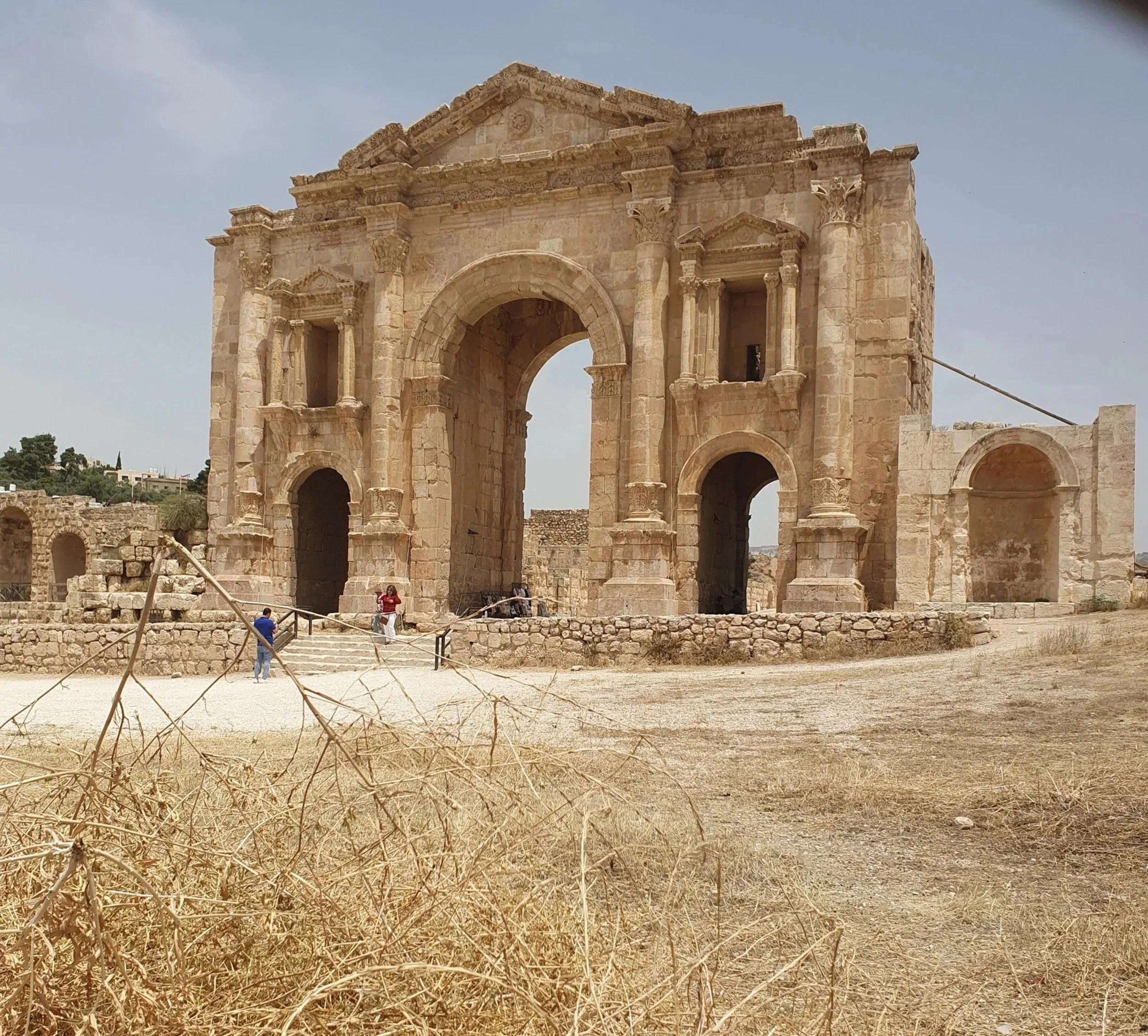
Gateway into Jerash or Antioch, an impressive entry to this Decapolis city
Actually, anything really old does – Australia was just not the right place for me, with its oldest structures dating back 150 years at a push, where an historic 80-year-old home was exciting. The Aboriginal rock paintings I’ve seen are amazing, but they never touch me like the ancient-ness of most of the rest of the world.
This particular site was a little more than 150 years old – more like 6,500 years of occupied history. It had been one of Rome’s Decapolis cities – ten significant cities across the Levant, or Rome’s province of Syria. This one was in Jordan, just a day trip north of Amman, the capital. Two of the others included Damascus – one of the oldest continuously inhabited cities in the world dating back 12,000 years.
And Philadelphia… but I’ll get to that one later.
Jerash boasts the ruins of the whole of the old city centre of Antioch, scattered across the hillsides. Right inside the gateway on its left there is a hippodrome in remarkably good condition.
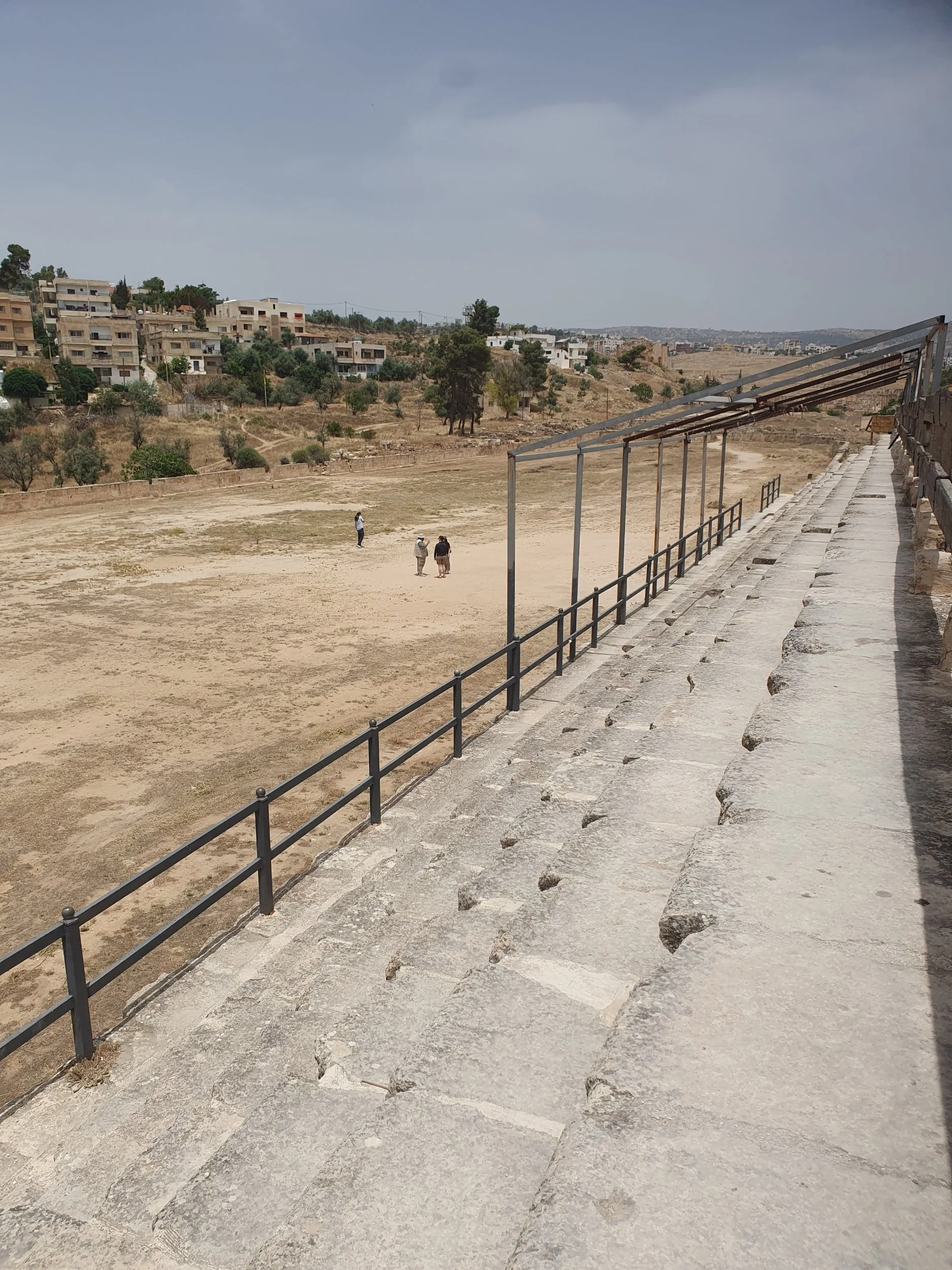
Looking down the length of the hippodrome - Imagine these seats full of an audience as excited as for a football grand final today, the thunder of the horses racing, the anticipation of spectacular skill, strategic manoevering, or a disaster.
A hippodrome is the long-narrow field used for chariot racing. Famously, there is a 9-minute chariot race in the Charlton Heston movie Ben Hur (1959), which won a record 11 Academy Awards and saved MGM studios from bankruptcy.
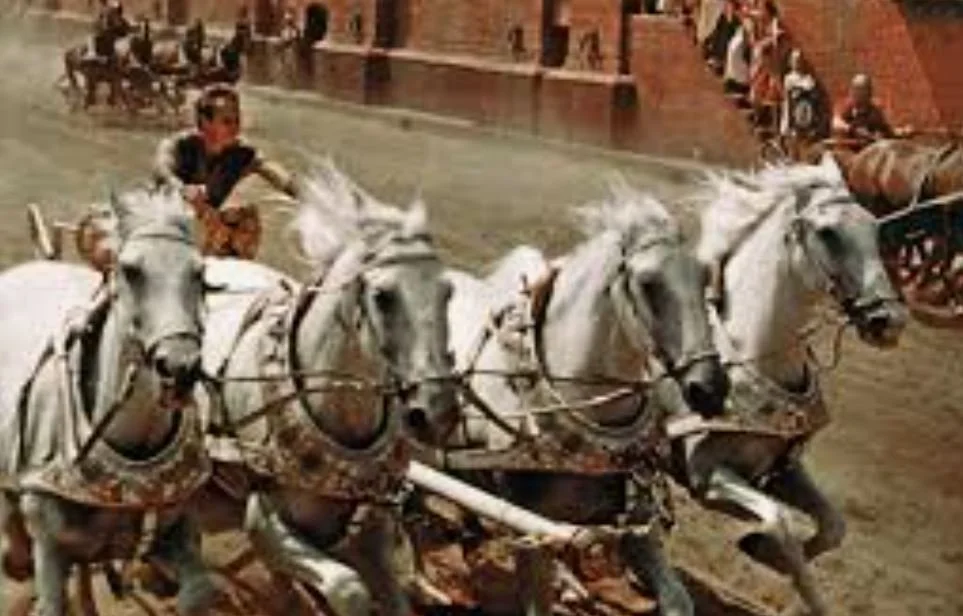
Charlton Heston in the Ben Hur chariot race scene.
Fun fact: Charlton Heston actually learned how to race the chariots for the movie. It requires physical strength to manage and control the four horses, skill to manoeuvre around the tight corners at up to 60 kph (40 mph), while balancing on the flimsy chariot. Accidents were frequent, deaths common and life expectancy of a charioteer was on the short side.
I looked through the arches out across the valley at the end of the hippodrome. I imagined the chariots lined up, the restless horses stamping impatiently, and the excited arena crowds – especially since I had been a part of one for the Gladiator 2 movie. In my mind I watched the senators and wealthy ladies find their seats and the poorer citizens crowd into their designated spots – the football spectacular of the ancient world.
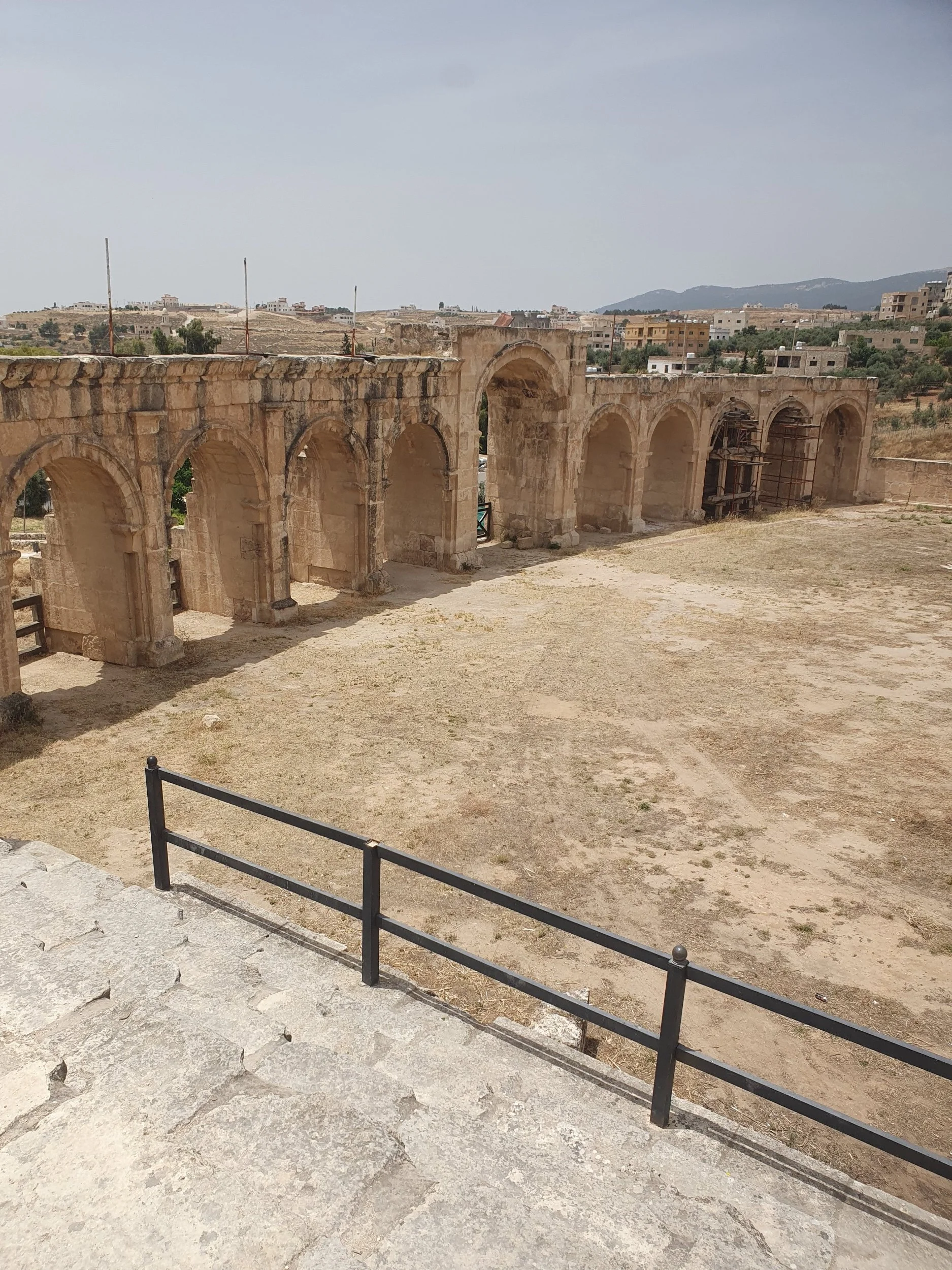
The official end of the hippodrome stadium, with spectacular views of the valley beyond framed by the arches, modern Jerash now included in the background.
But this was just the beginning of Jerash. I didn’t yet know just how big the site was. I turned my back to the valley view and walked the length of the hippodrome with its nooks for shops and rest rooms.
Past it I came to a huge oval plaza – the town centre and meeting place. Columns ringed the far side, facing the Temple of Artemis. I climbed up the steps as thousands of Romans had done before me. From the top the view across the old ruined city was spectacular – the new modern city, and the hills beyond.
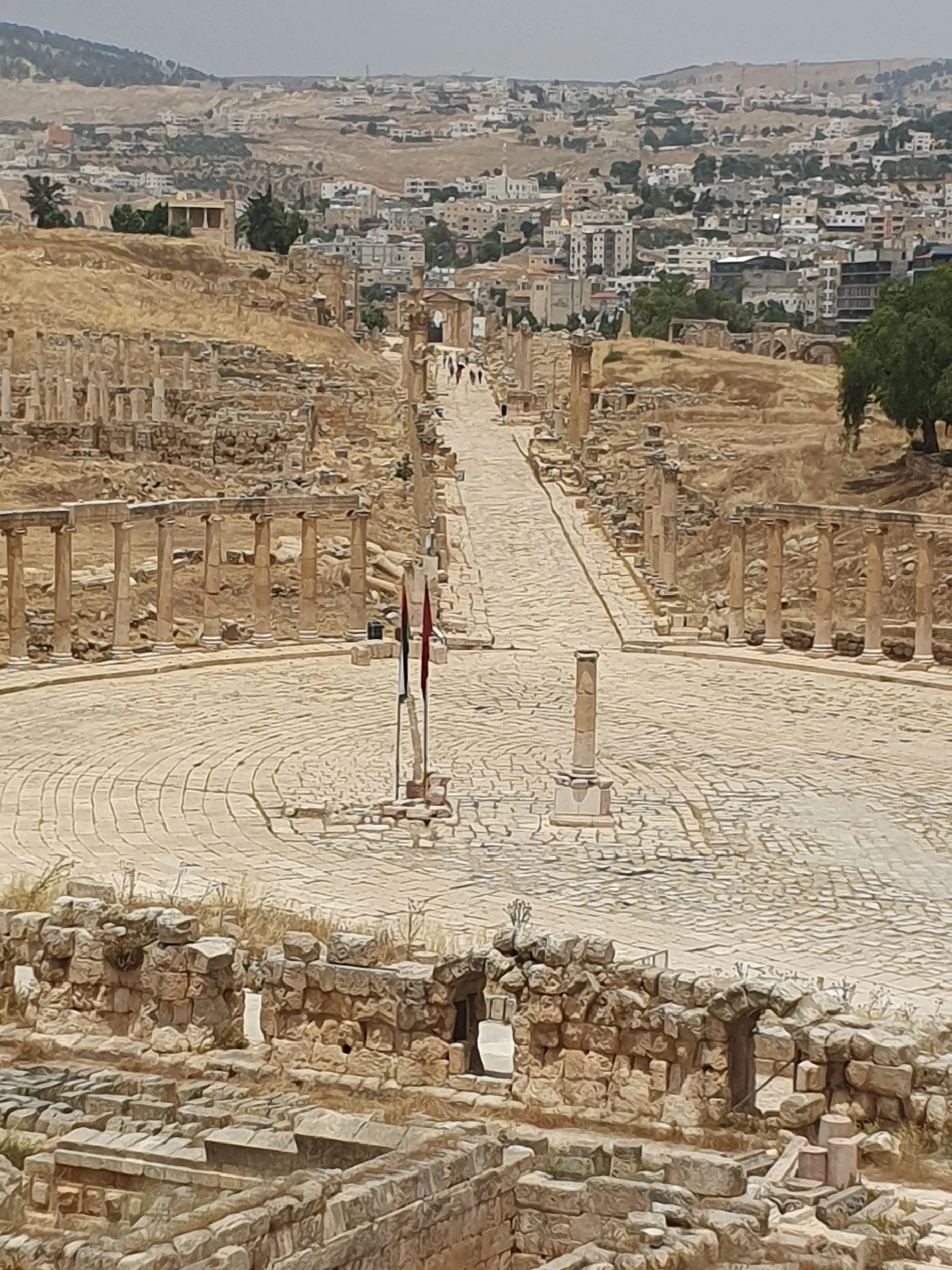
From the Temple of Artemis, views of the huge circular pubic plaza ringed with columns, the straight street through the old town, and modern Jerash beyond. These plazas were the centre of a Roman city, where the government and official business happened, and everything of importance.
I stepped between the wheel ruts along a soldier-straight avenue which ran all the way to the gate at the far end of the city centre. It was exactly as I had read about when I studied Latin. Hundreds of years of wagons, chariots and cart wheels had worn tracks in the paving stones. I stepped across the raised stepping stones placed as wet weather crossings, placed with room for the cart wheels!
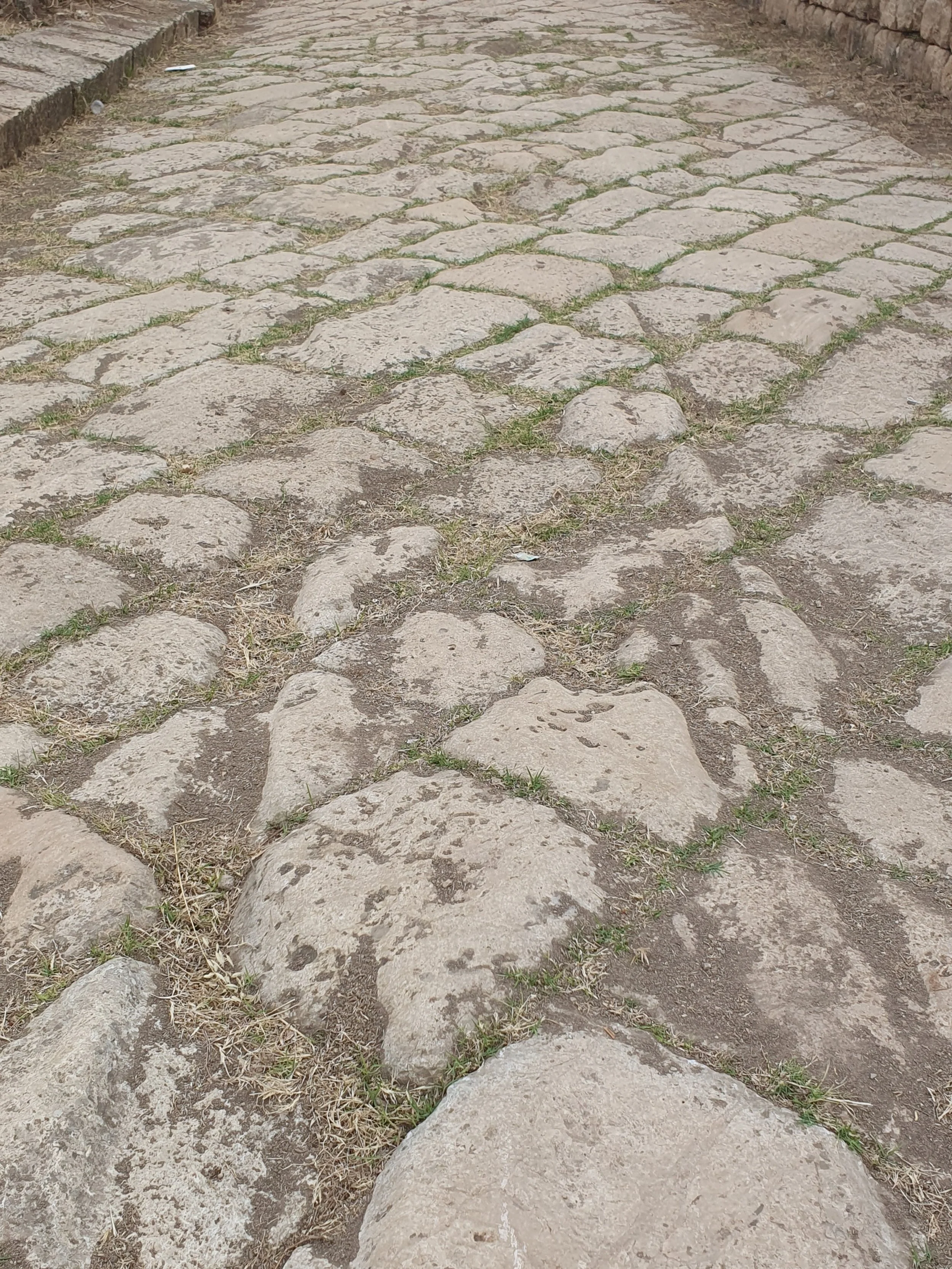
These road stones and wheel ruts fascinate me as evidence of life in action, 2,000 years ago. They make me feel like I can actually see it happening.
The famous four pillared, four-way gate straddled in the middle. Large public water fountains provided water to drink, endless temples, bath houses, administrative buildings – even an amphitheatre.
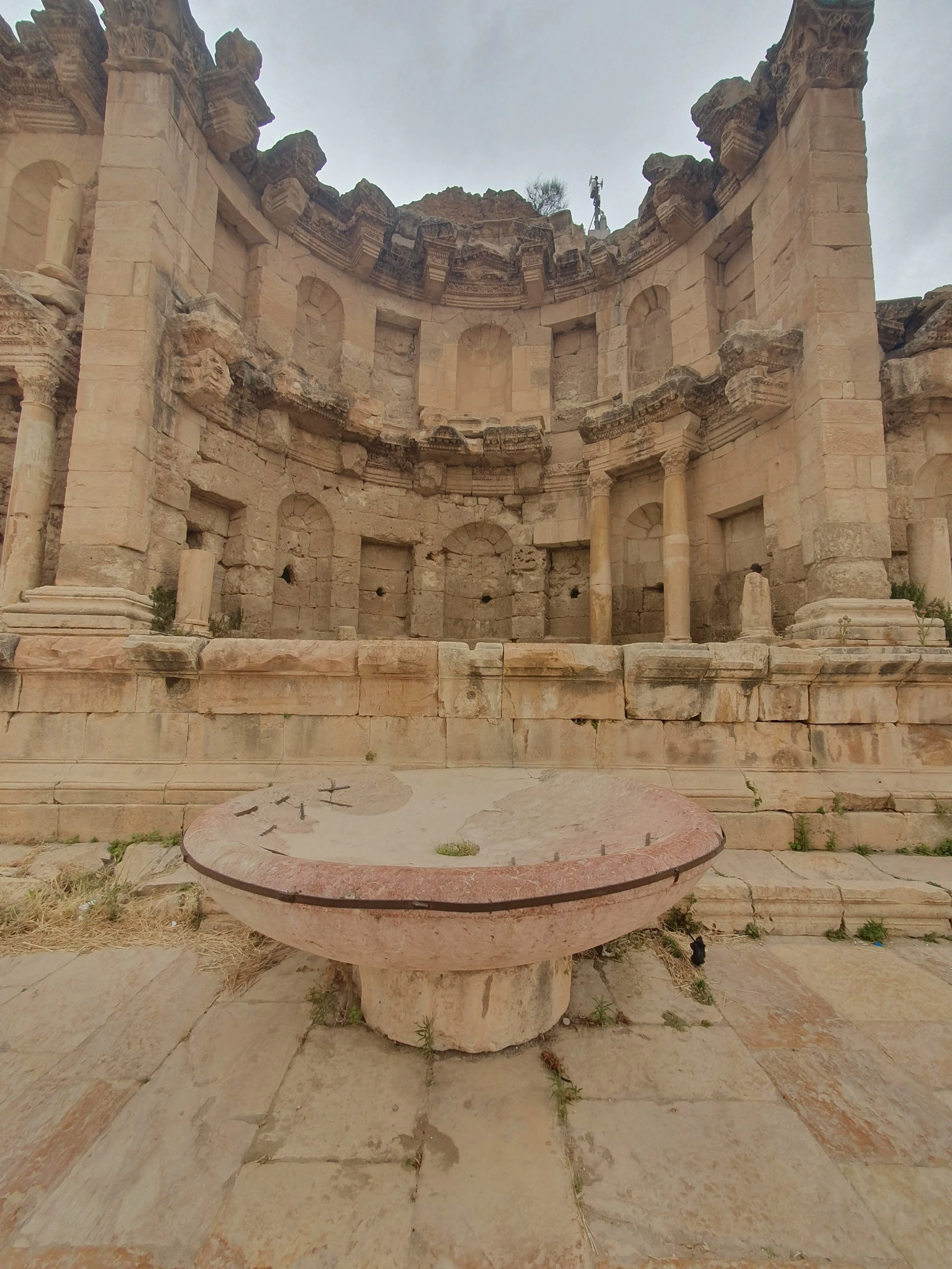
Such an elaborate drinking-water feature with the fountain sticking right out into the roadway for public access must have been quite a sight!
I frowned at an out-of-place moaning sound coming from the amphitheatre. It contradicted the Roman ruins, and Jordan. I peered in through its gateway.
Inside the arena there was a group of people – In this ancient Roman city, in northern Jordan in the Middle East, most in their traditional Jordanian Bedouin gear which I see everywhere, the long white ‘dress’. He was playing the bagpipes - not something I had anticipated that morning!
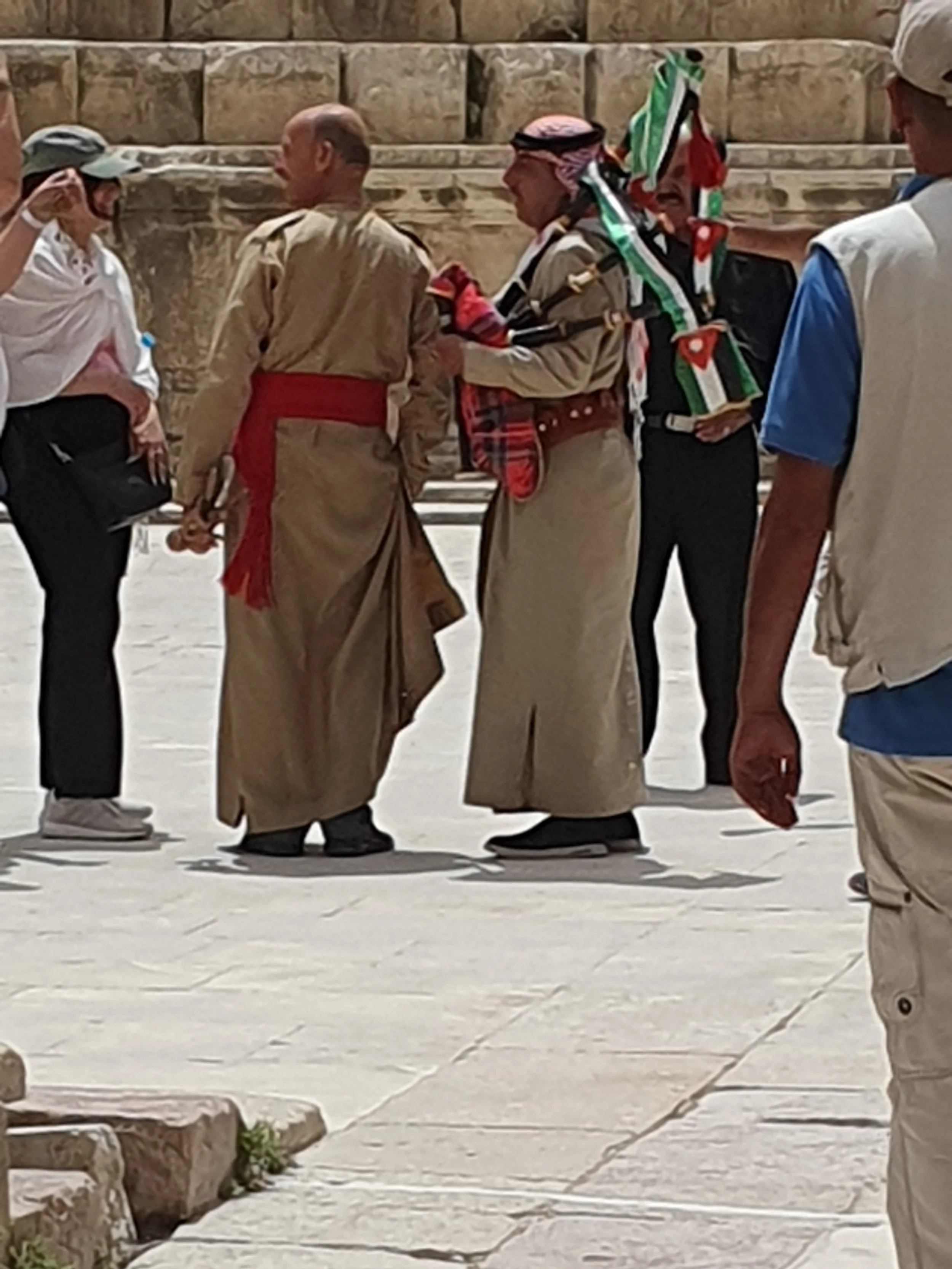
The red tartan in the middle are the bagpipes that he had been playing until a moment before I took this photo, the ancient stone amphitheatre seats climbing up behind him.
I shook my head and continued along the trails across the hillsides, imagining as always how they must have looked. Instead of the grassy view to the new town, there would have been a forest of buildings – official ones, entertainment, and the homes of the rich, most 2 to 4 storeys high with the temples and triumphal arches towering over them.
The streets would have gleamed from the white stones, the clatter of carts and horses, and the hubbub of chatter, and hawkers calling for attention to sell their goods. I could almost smell the food being cooked and served at various types of eating places and street stalls, no doubt with an early Levant spin, the predecessors perhaps of mansaf and maqlouba.
Or maybe it was simething like the stadium treats as in the Life of Brian: Wolf Nipple Chips, Jaguar Ear Lobes, Philadelphian Larks' Tongues, Otter Noses, Sparrow Brains…
Finally, I had reached the Temple of Zeus, the spot where I started to feel dizzy, and the black spots started interrupting my vision.
Hashem who had given me water, now gave me two oranges. He knew dehydration when he saw it. I was probably only one of many. Jordan gets hot in summer, although this was only May, in 2024. But I hadn’t been drinking enough water.
He and his friend Omar, whose jobs it was to take care of the temple, chatted to me. We talked about how hard it was because the tourists had dropped off so dramatically after October 7th 2023 when Israel started its latest attack on Gaza. They also told me how the Queen of Jordan, of Palestinian origins, had visited recently, how delightful and relaxed she was.
“Here.” Hashem offered me a small packet. It was a pair of biscuits. He was ensuring I had plenty of sugars of different types. Hashem and Omar looked after me til I was rehydrated and feeling better. I may have been amazed at the ruins in Jerash, but it is the Jordanians I remember.
It was the “Pompeii of the East”, and I made the mistake of drinking too little. But it wasn’t my big mistake.
Most people plan a trip based on the places they’ve heard about. But that is just grazing the surface of amazing places. My first trip to Jordan in January 2023, I knew almost nothing about it.
To be honest, I’m not entirely sure I even knew exactly where it was. I had certainly never heard of its capital, Amman – now a familiar and friendly city for me. In fact, even when I had looked up the location of the famous Petra, I really only comprehended that it was somewhere in the middle of a big bunch of desert somewhere out of Egypt.
So where exactly is Jordan?
It lies along the east edge of Israel-Palestine with the Dead Sea in between. It is just north-east of Egypt and the Sinai Peninsula. In fact, from the Gulf of Aqaba at Jordan’s sole sea port, it is one of only two places in the world where it is possible to see four countries at once: Egypt, Israel-Palestine, Jordan, and Saudi Arabia. (The other is on the Zambezi River in southern Africa.)
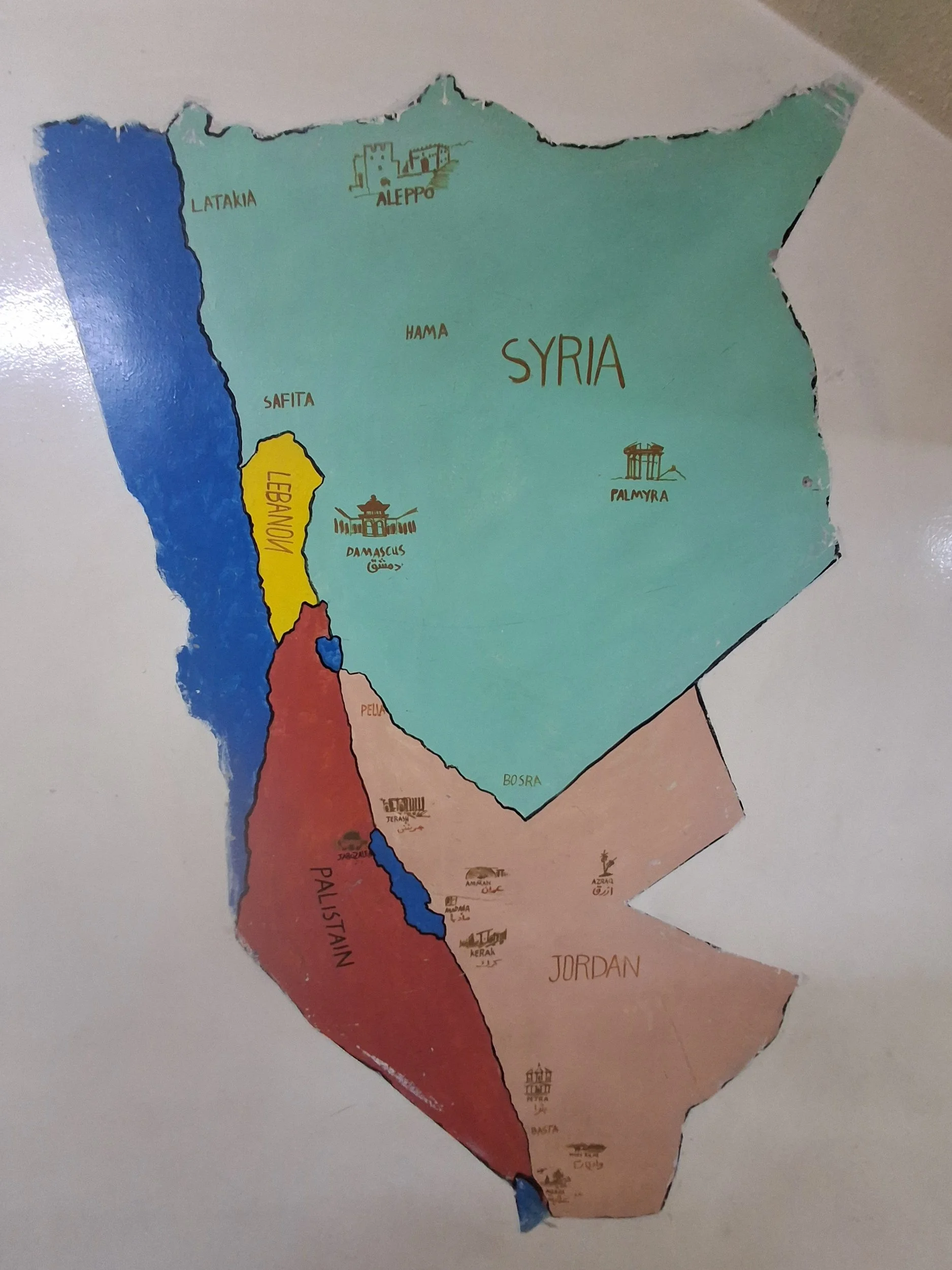
From the sea at its southern tip - the Gulf of Aqaba - you can also see Egypt on the left in the West bordering all along the Israel-Palestine border, and Saudi Arabia on the right in the East, below and to the East of Jordan. Iraq takes the top little stretch sandwiched between Jordan and Syria.
It is a predominantly arid, desert country, although green and fertile in the north. Not only does it have an extraordinary history as part of the cradle of civilization of Mesopotamia, being the original Canaan, but it also has a huge Graeco-Roman history, part of the Crusades, plus many sites from the stories of the Bible. Some include:
· Where Moses died
· Bethany on the Jordan River where Jesus was baptized by John the Baptist
· Machaerus, the hilltop where John the Baptist was beheaded
· The cave near the Dead Sea, where Lot’s wife turned into a pillar of salt fleeing from Sodom
· Tell Mar, the home of the prophet Elijah
And the amazing 6th century mosaic map in Madaba, the oldest map known of the Holy Lands.
Jordan is a forgotten secret travel spot. But there is one spot that tops even all the others – the one where I made my big mistake.
It is the temple site used in the first Indiana Jones movie – Raiders of the Lost Ark (1981). This is the type of stuff I write, blending historical mysteries and secrets with a romp across different countries, some chases and dramas, a few dead bodies, and a big explosion, preferably of something famous.
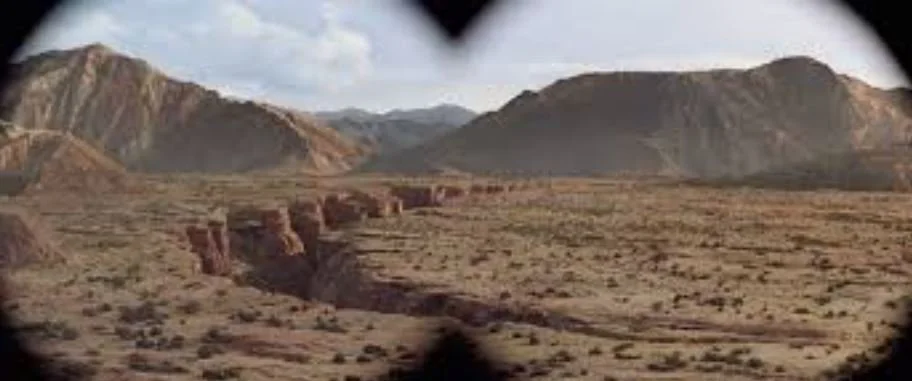
Canyon of the Crescent Moon, scene from Indiana Jones - Raiders of Lost Ark (1981).
In the movie, Indie is looking for the Canyon of the Crescent Moon set down into the desert rocks. The crescent shaped valley is fiction, but the Temple of the Sun is very real. And it is down in a rocky gully. It is the famous Treasury of Petra.
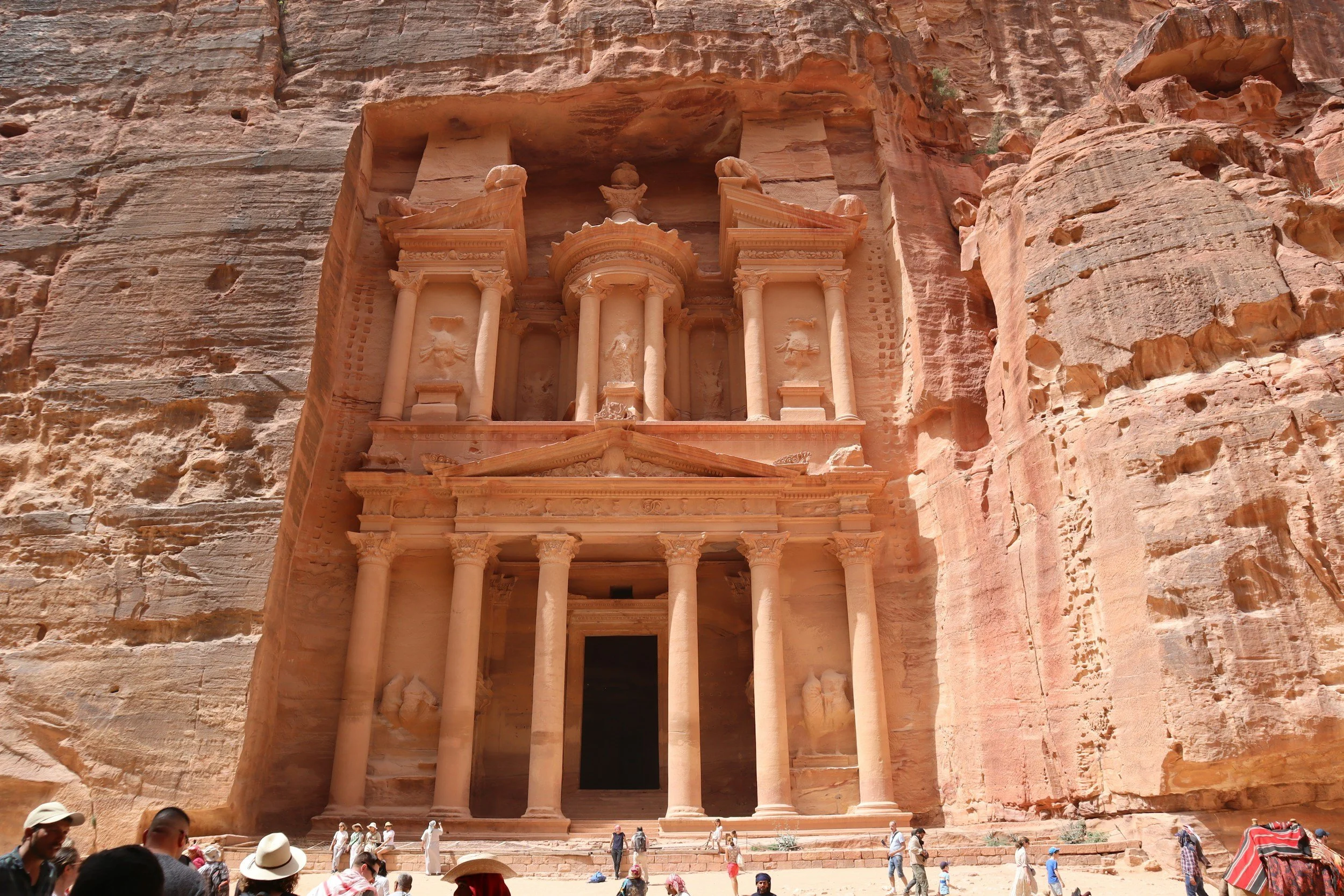
The Treasury in Petra, used in Raiders of the Lost Ark as the Temple of the Sun.
Petra is one of the Seven Wonders of the World, an amazing ancient city and trading post with sophisticated infrastructure for water and waste disposal.
Largely carved out of the cliffs.
And it is huge. The current site is roughly four times the size of Manhattan, but archaeologists estimate that 85% of it is still hidden.
It was built by the Nabateans around 500BC – at the time of Herodotus and the Greek Golden era. Much of this “Rose City” is carved out of the red cliff faces – across a huge territory. And like some of the most amazing spots on our planet, the world had forgotten it even existed until 1812, just over 200 years ago.
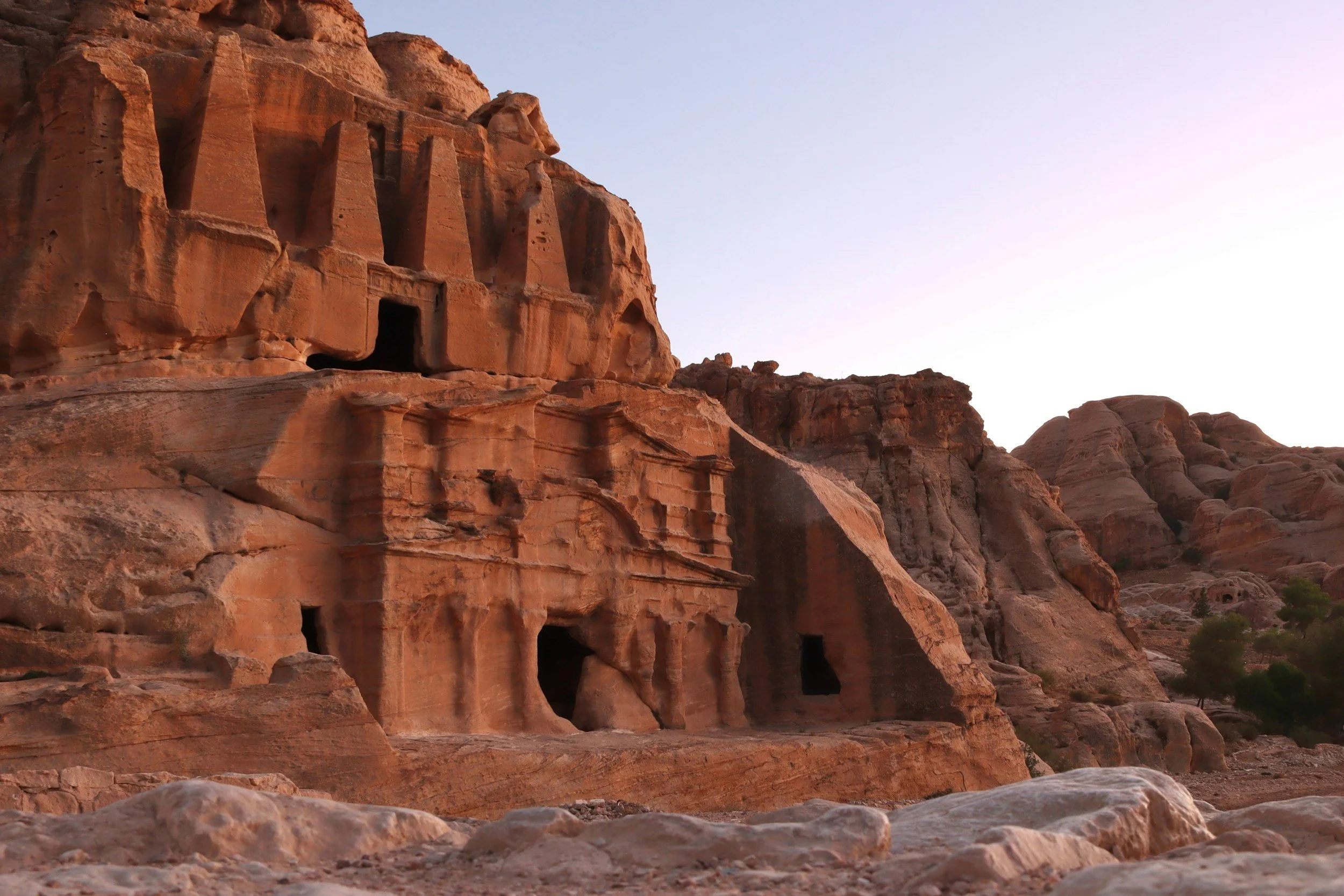
Just one other of the carved buildings.
Well, that’s not quite true. The local Bedouins knew it was there. It was the western world that had lost knowledge of it, and arrogantly that “meant” everyone. And yet this ancient trade city had an elaborate water systems including cisterns and channels to make an oasis out of the desert. It must have been a spectacular site with the lush greenery of the foliage against the red stone buildings.
Don’t make the mistake of rushing the trip like I did. It is in southern Jordan, and Jordan isn’t small.
I arrived all glassy eyed from a dawn bus ride – 3 ½ hours from Amman, after getting myself to the bus terminal. This was my first mistake, though not the big one. You can do a trip to Petra as a day return, but it doesn’t do it justice. A 2 or 3-day ticket would have been a much better choice, with time to add walks to some of the more distant spots in the city.
But even after my early morning bus ride through the Jordanian desert I was still excited – half because it was a movie location, half because by now I’d realized just how amazing this place was. I couldn’t wait to see the Treasury as in the film scene of Indiana Jones when he arrives through the narrow gorge with its sides of the jagged red, wind carved rock. Was it even real? Or mostly just a part of the special effects of the movie?
When I reached the entrance to the city, an army of tour guides vied for my attention with promises of the unique and rare angles of Petra. I rarely take the tours. I like being independent to enjoy a site at my own pace. But the temptation for something extra special was too much.
I gave in and paid for one.
The lovely guide and his son led me over the top of the site, along trails with spectacular views. We stopped at a small home amongst the rocks for a Bedouin tea and the hospitality of a sweet lady.
Here I hit my second mistake at Petra – or rather, mishap. My phone was getting old. I actually had arranged a new one, but it wasn’t to be in my hand until after my trip.
And that day, my old phone died.
I don’t have a single photo.
My guide took photos to send to me – sent them to me while I was still with him, but my phone never got them. The memories of one of the most iconic sites in the world will have to live on only in my head.
Don’t misunderstand me. Coming out above the Treasury, looking down on it at an angle most visitors don’t see, was definitely a sight to remember. To reach it I climbed down the cliff face. This was indeed something special.
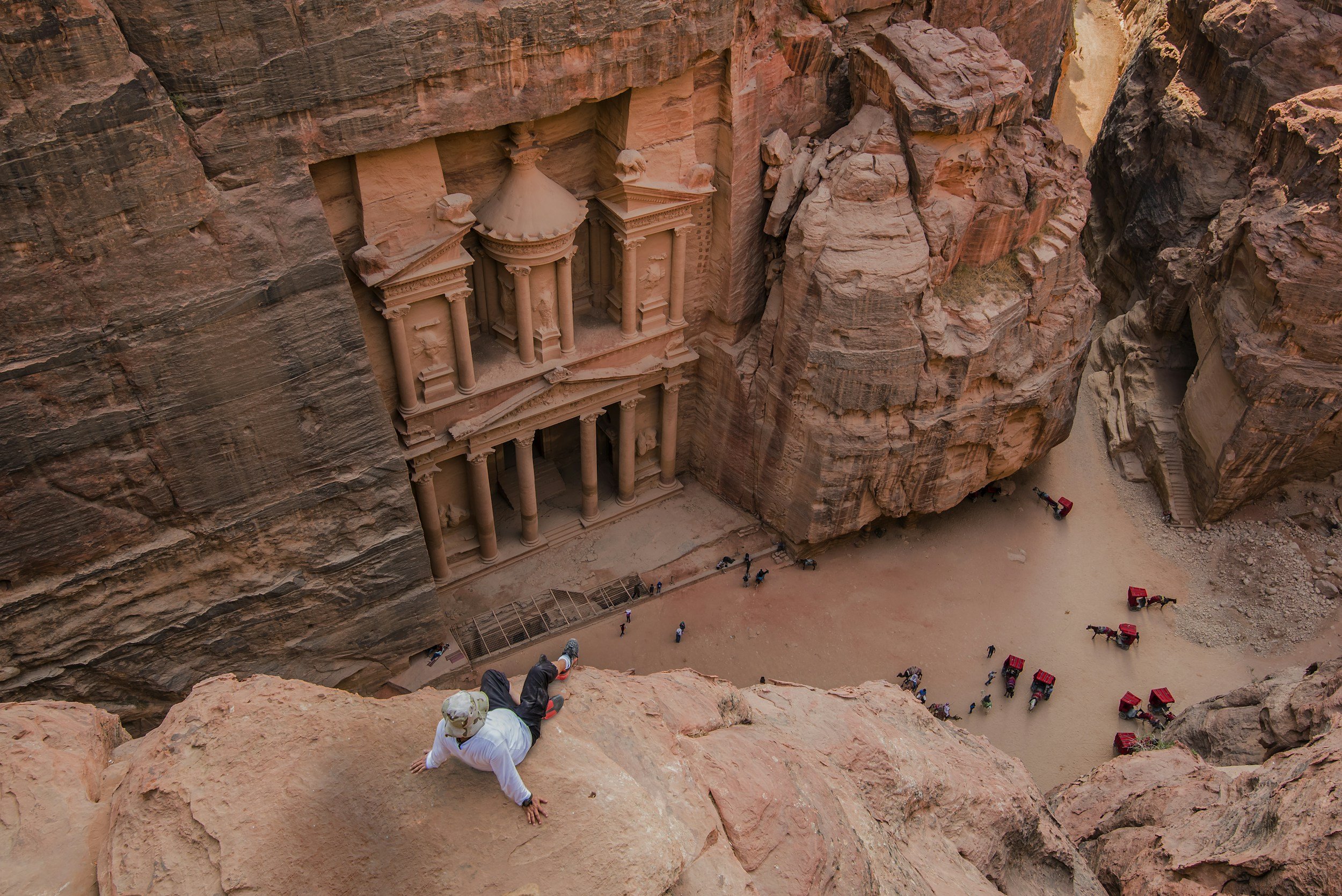
My first view of the Treasury. No two ways - it was a spectacular sight, and a magnificent first view.
But it was also my mistake.
In the movie Indie arrives by passing through the dramatic and spectacular narrow canyon lined by jagged red rocks carved by the wind. This part is not fiction. It is the most dramatic first view of an extraordinary site. The Siq.
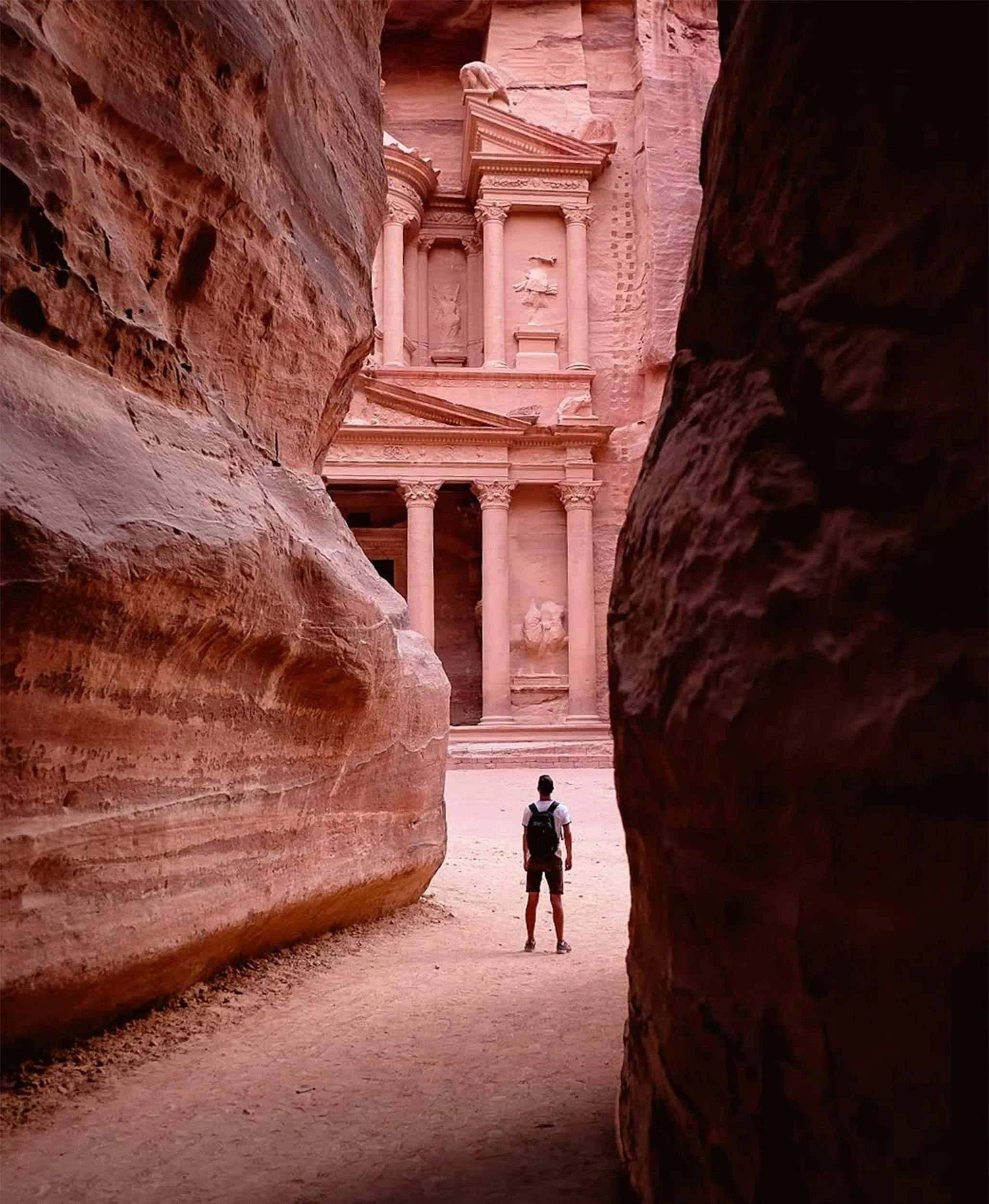
View of the Treasury from The Siq, the one I have to go back for.
But coming over the top, I missed that. And now I can never do that, because it can now never be my first view.
Petra is a must see. It is incredible, a city that defies the imagination. My mistake just means I will have to go back, revisit the incredible vistas of this ancient but huge city. I want to explore the areas which were too far for my short window:- The Monastery accessed by climbing 800 steps carved into the rocks, The Nabataean and Graeco-Roman styled Royal Tombs carved into the cliff face just two.
Next time, I will buy a three-day entry pass. I will pass through The Siq gorge and pretend it’s my first time. The guided tour would make an excellent second day. And I will also go to Wadi Rum, not just the movie location for Lawrence of Arabia (1962, Omar Sharif), not just where most of the original story took place: It is also a spectacular Wadi or desert valley in its own right. I want to spend a night at one of the camps there, under the stars.
If you go to Jordan by ferry from Egypt, visa entry is free. The Petra entry ticket is 50 Jd ($70usd), and a mere additional 5Jd for each extra day. If you fly in, buy a Jordan Pass for 70Jd ($90usd). This includes Petra entry, your visa (39Jd,$55usd), and free or discounted entry to many of the sites and museums around Jordan.
Long story short, even in the fuss at the present, Jordan is still a safe destination. I flew through Amman’s airport again recently in the middle of the Hormuz strife. The only real danger I faced was severe dehydration from not drinking enough water on a hot day in the sun. As an Aussie, I should know better.
If you want an adventure in a spectacular but less explored part of the world, treat yourself to Jordan!
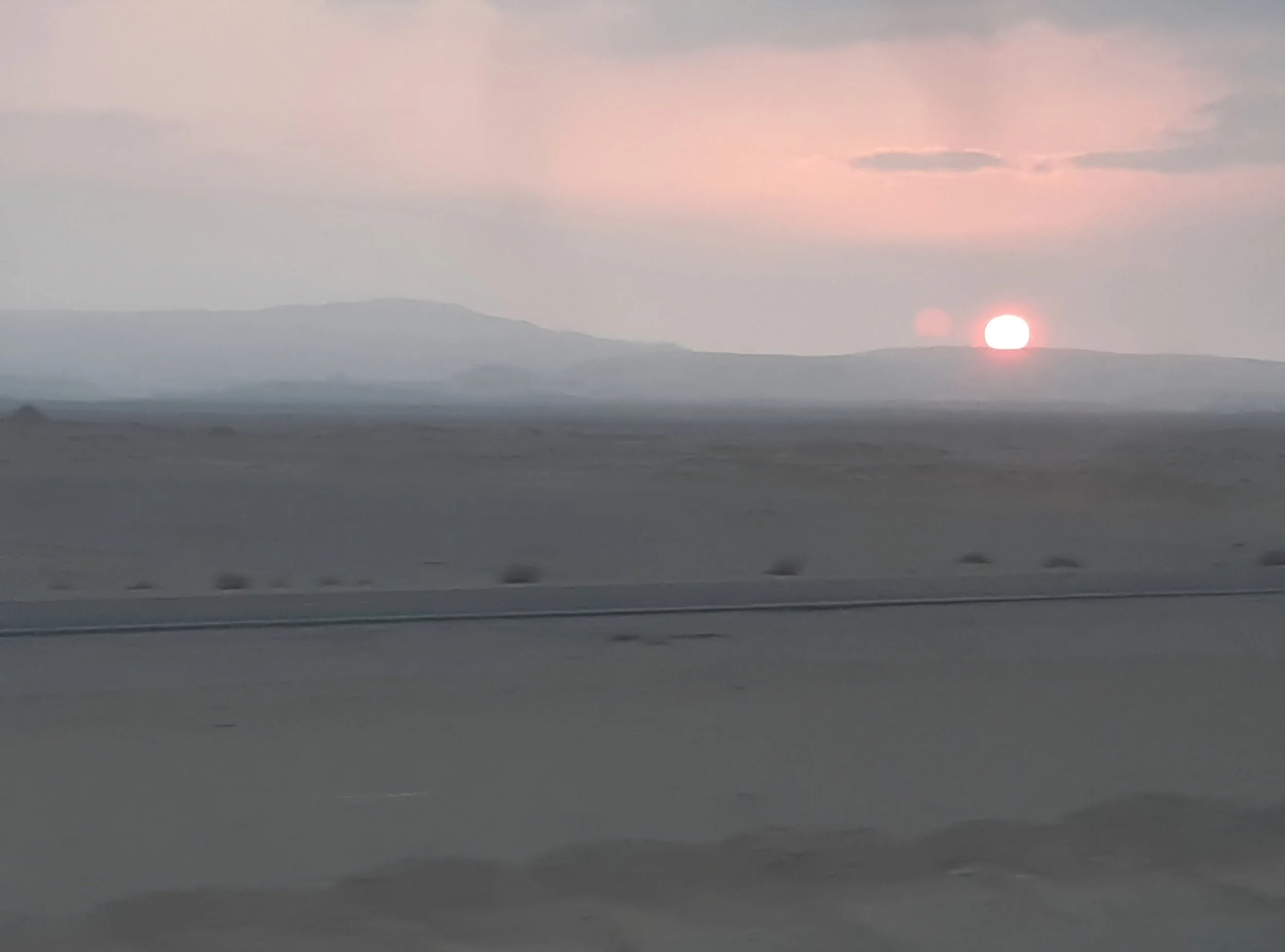
The only actual photo I still have of my trip to Petra - the sun rising over the desert from the bus on the way down, before my phone died.